

In today's home entertainment landscape, mounting your TV on the wall has become a popular choice for optimizing space and enhancing the viewing experience. As a leading supplier of TV mounting brackets, we often encounter customers asking about the differences between single - arm and double - arm TV mounting brackets. In this blog, we'll delve into the key distinctions between these two types of brackets, helping you make an informed decision for your TV installation needs.
Design and Structure
The most evident difference between single - arm and double - arm TV mounting brackets lies in their design and structure. A single - arm TV mounting bracket, as the name suggests, features a single support arm that connects the TV to the wall. This design is relatively simple and straightforward. It usually consists of a wall plate that is fixed to the wall, and a single arm that attaches to the back of the TV. The single - arm design is compact and takes up less space, making it suitable for smaller rooms or areas where space is at a premium.
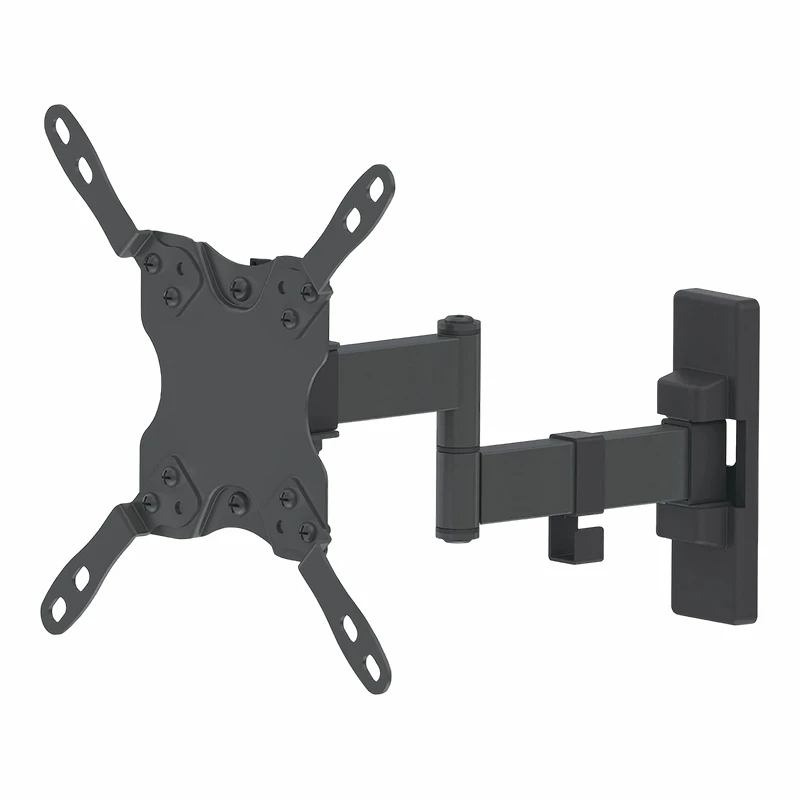

On the other hand, a double - arm TV mounting bracket has two support arms that connect the TV to the wall. This design provides more stability and support, especially for larger and heavier TVs. The double - arm structure distributes the weight of the TV more evenly across the wall, reducing the stress on any single point. Double - arm brackets often have a more robust appearance and are designed to handle TVs with a larger screen size and greater weight.
Range of Motion
Another significant difference between single - arm and double - arm TV mounting brackets is their range of motion. Single - arm brackets generally offer a more limited range of movement compared to double - arm brackets. Most single - arm brackets provide basic tilt functionality, allowing you to adjust the vertical angle of the TV. This is useful for reducing glare from overhead lights or adjusting the viewing angle when the TV is mounted at a higher position. Some single - arm brackets may also offer a small amount of swivel, but the degree of swivel is usually less than that of double - arm brackets.
Double - arm TV mounting brackets, on the other hand, typically provide a wider range of motion. In addition to tilt and swivel, many double - arm brackets can also extend and retract. The extendable feature allows you to pull the TV away from the wall, making it easier to access the ports on the back of the TV or to adjust the viewing angle from different positions in the room. The retractable function enables you to push the TV back close to the wall when not in use, saving space. This flexibility in movement makes double - arm brackets ideal for large living rooms or home theaters where viewers may be sitting at various angles.
Installation and Adjustment
When it comes to installation, single - arm TV mounting brackets are generally easier and quicker to install compared to double - arm brackets. The single - arm design means there are fewer components to install, and the alignment process is simpler. This makes single - arm brackets a popular choice for DIY enthusiasts who want to mount their TVs themselves without professional help.
Double - arm brackets, with their more complex structure, require a bit more time and effort to install. The installation process involves aligning two arms correctly to ensure proper balance and support for the TV. Additionally, since double - arm brackets often offer more features such as extension and retraction, the adjustment process can be more involved. However, once installed correctly, double - arm brackets provide a high level of stability and functionality.
Load Capacity
Load capacity is an important factor to consider when choosing a TV mounting bracket. Single - arm brackets typically have a lower load capacity compared to double - arm brackets. This is because the single - arm design has only one point of support for the TV, which limits the amount of weight it can safely bear. Single - arm brackets are usually suitable for smaller TVs, typically up to 42 inches in screen size and with a relatively light weight.
Double - arm brackets, with their two - arm structure, can handle larger and heavier TVs. They are designed to distribute the weight of the TV more evenly, allowing them to support TVs with screen sizes of 43 inches or larger and heavier weights. If you have a large - screen TV or a high - end TV with additional components that add to its weight, a double - arm bracket is a better choice to ensure the safety and stability of your TV.
Aesthetic Considerations
Aesthetics can also play a role in choosing between single - arm and double - arm TV mounting brackets. Single - arm brackets have a sleek and minimalist look. They blend in well with modern and contemporary interior designs, especially in smaller spaces where a less obtrusive look is desired. The single - arm design gives the TV a floating appearance on the wall, creating a clean and uncluttered look.
Double - arm brackets, on the other hand, have a more substantial and industrial look. They can add a sense of strength and durability to the TV installation. In some cases, the double - arm design can be a design feature in itself, especially in more modern or industrial - style interiors. However, in some minimalist or space - constrained environments, the double - arm design may appear too bulky.
Other Related TV Mounting Products
In addition to single - arm and double - arm TV mounting brackets, we also offer a wide range of other TV mounting products to meet different customer needs. For example, we have the Car Ceiling Storage Rack, which is a unique solution for mounting a TV in a car. It provides a convenient way to enjoy entertainment during long drives.
Our Long Articulating Tv Mount offers an extended range of motion, allowing you to position the TV at various angles and distances from the wall. This is perfect for large rooms or home theaters where you need maximum flexibility in viewing.
The Adjustable-tilt Mount is a great option if you only need to adjust the vertical angle of the TV. It is simple to install and provides a cost - effective solution for reducing glare.
For those who need a more flexible and movable TV setup, our TV Floor Stand and Cart is an excellent choice. It allows you to move the TV from one room to another easily.
And if you want both tilt and swivel functionality, our Tilting and Swiveling Mount provides a great balance between flexibility and stability.
Conclusion
In conclusion, the choice between a single - arm and double - arm TV mounting bracket depends on several factors, including the size and weight of your TV, the available space in your room, your desired range of motion, and your aesthetic preferences. Single - arm brackets are ideal for smaller TVs, limited spaces, and those who want a simple and easy - to - install solution. Double - arm brackets, on the other hand, are better suited for larger TVs, rooms where a wide range of motion is required, and when maximum stability is a priority.
As a professional TV mounting bracket supplier, we are committed to providing high - quality products and excellent customer service. If you have any questions about choosing the right TV mounting bracket for your needs or are interested in purchasing our products, please feel free to reach out to us for a detailed discussion and procurement negotiation. We look forward to helping you create the perfect TV viewing experience.
References
- Various industry reports on TV mounting bracket design and functionality.
- Manufacturer's specifications for single - arm and double - arm TV mounting brackets.
- Customer feedback and reviews on different types of TV mounting brackets.